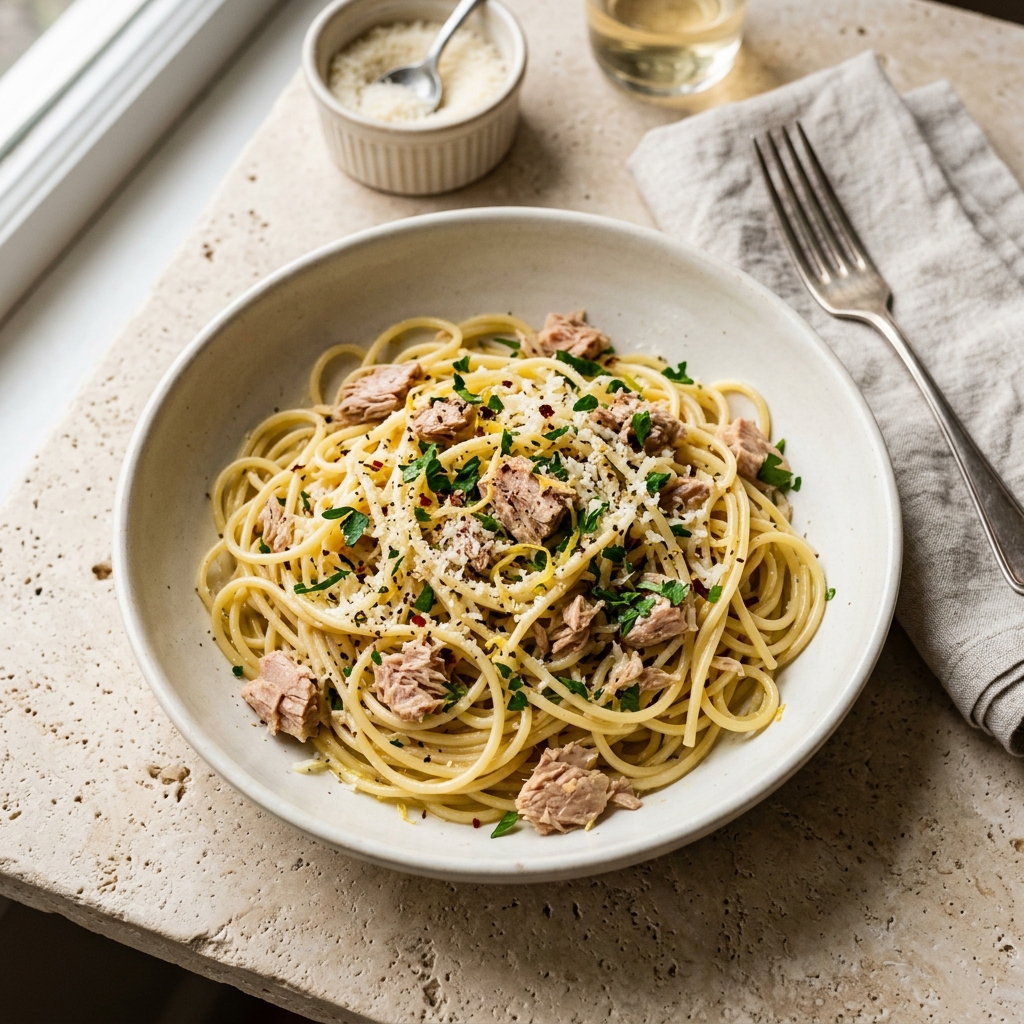
Some nights, lazy dinners are exactly what saves the day, and this easy canned tuna pasta is one of my favorite answers. When you want something warm, filling, and fast without ordering takeout, this recipe comes through with simple pantry ingredients and almost no effort. If you have pasta, a can of tuna, a little olive oil, garlic, and a lemon, you’re already most of the way there.
I love this recipe because it tastes far more put-together than the time it actually takes. The spaghetti gets lightly coated in garlicky olive oil, then tossed with flaky tuna, a little lemon zest and juice, herbs, and grated cheese for a clean, savory finish. It’s not heavy or overly saucy, which makes it perfect for weeknights when you want comfort food that still feels fresh.
If you’ve ever stared into your pantry wondering what you can make in 15 minutes, I think you’re going to come back to this one again and again. It’s budget-friendly, family-friendly, and easy to adapt depending on what you have on hand. For me, that’s exactly what the best lazy dinners should be.
Quick Recipe Info Card
- Prep time: 5 minutes
- Cook time: 10 minutes
- Total time: 15 minutes
- Servings: 4
- Difficulty: Easy
Why You’ll Love It
- It’s ready in just 15 minutes from start to finish.
- Perfect for lazy dinners when cooking energy is low.
- Uses affordable pantry staples you may already have.
- Light yet satisfying, with savory tuna and bright lemon.
- No complicated sauce and very little cleanup.
- Easy to customize with herbs, spice, or extra vegetables.
- Works well for a quick lunch or an easy weeknight dinner.
Nutritional Benefits and Adaptable Variations
- Tuna adds protein: Canned tuna makes this pasta more filling and helps turn a simple bowl of noodles into a balanced meal.
- Olive oil keeps it light: Instead of a heavy cream sauce, olive oil gives the pasta a glossy finish and rich flavor.
- Lemon brightens everything: Fresh lemon zest and juice add freshness without extra heaviness.
- Herbs add flavor fast: Parsley brings color and freshness with almost no extra prep.
- Try whole wheat pasta: For more fiber, swap regular spaghetti for whole wheat spaghetti.
- Add heat if you like: A pinch of red pepper flakes gives the pasta a gentle kick.
- Make it extra hearty: Stir in peas, spinach, or halved cherry tomatoes near the end.
- Swap the pasta shape: Linguine, angel hair, or short pasta all work well here.
Ingredients
- For the pasta
- 12 ounces spaghetti
- Salt, for the pasta water
- For the tuna mixture
- 2 tablespoons olive oil
- 3 cloves garlic, minced
- 2 cans tuna in olive oil or water, drained
- 1 teaspoon lemon zest
- 2 tablespoons fresh lemon juice
- 1/4 teaspoon black pepper
- 1/4 teaspoon red pepper flakes, optional
- 1/4 cup chopped fresh parsley
- 1/3 cup grated Parmesan cheese, plus more for serving
- 2 to 4 tablespoons reserved pasta water, as needed
Step-by-Step Instructions
[INSERT PROCESS IMAGE HERE]
- Bring a large pot of well-salted water to a boil. Cook the spaghetti according to the package directions until al dente. Before draining, reserve about 1/2 cup of the pasta water.
- While the pasta cooks, warm the olive oil in a large skillet over medium-low heat. Add the minced garlic and cook for about 30 seconds, just until fragrant. Do not let it brown.
- Add the drained tuna to the skillet and gently break it into flakes with a spoon. Stir in the lemon zest, lemon juice, black pepper, and red pepper flakes if using. Let everything warm through for 1 to 2 minutes.
- Add the drained spaghetti to the skillet along with the chopped parsley and grated Parmesan. Toss well to coat the pasta evenly.
- Add 2 to 4 tablespoons of reserved pasta water, a little at a time, until the pasta looks glossy and lightly coated.
- Taste and adjust if needed, then serve right away with extra Parmesan, more parsley, and a little extra lemon zest if you like.
Tips, Serving Suggestions & Substitutions
- Salt the pasta water well: Since this is a simple recipe, seasoning the pasta itself makes a big difference.
- Use al dente pasta: Slightly firm spaghetti holds up better when tossed with the tuna mixture.
- Don’t overcook the garlic: Keep the heat gentle so the garlic stays fragrant and doesn’t turn bitter.
- Reserve pasta water: This is the trick that helps create a silky, lightly glossy coating without a heavy sauce.
- Use the tuna you like best: Tuna packed in olive oil gives a richer result, but water-packed tuna works perfectly too.
- Add vegetables: Stir in baby spinach, thawed peas, or sautéed zucchini for a little extra color and nutrition.
- Try different herbs: Basil or dill can work nicely if that’s what you have.
- Serving ideas: I like this with a simple green salad, roasted broccoli, or warm crusty bread on the side.
- Dairy-free option: Skip the Parmesan or use a dairy-free alternative. Add an extra drizzle of olive oil to keep it flavorful.
Nutrition Information
| Nutrient | Approximate Amount Per Serving |
|---|---|
| Calories | 465 |
| Carbohydrates | 46 g |
| Protein | 27 g |
| Fat | 18 g |
| Saturated Fat | 4 g |
| Cholesterol | 32 mg |
| Sodium | 390 mg |
| Fiber | 2 g |
| Sugar | 1 g |
These nutrition values are estimates per serving and can vary depending on the brand of tuna, pasta, and cheese you use.
Storage & Make-Ahead Tips
This pasta is best eaten fresh, when the texture is glossy and the tuna is just warmed through. If you do have leftovers, let them cool and store them in an airtight container in the refrigerator for up to 2 days.
To reheat, add the pasta to a skillet with a small splash of water and warm gently over low heat until hot. You can also microwave it in short intervals, stirring in between, until fully heated. For food safety, make sure leftovers are reheated thoroughly before serving.
If you want to get ahead, you can mince the garlic, chop the parsley, grate the Parmesan, and zest the lemon earlier in the day. Once dinner time hits, all you really have to do is boil the pasta and toss everything together.
FAQ
1. Can I use a different pasta shape for this recipe?
Yes, absolutely. Linguine, fettuccine, penne, or even rotini work well. I like spaghetti because it pairs nicely with the flaky tuna and light coating, but many shapes will work.
2. Should I use tuna packed in oil or water?
Either one is fine. Tuna packed in oil gives a slightly richer flavor, while water-packed tuna keeps it a little lighter. Just be sure to drain it well before adding it to the skillet.
3. Can I make this without Parmesan?
Yes. The pasta will still be tasty without cheese. You can add a little more olive oil and lemon juice for extra flavor, or use a dairy-free Parmesan-style alternative if needed.
4. How do I keep the pasta from drying out?
The reserved pasta water is key. Add a little at a time while tossing until the spaghetti looks glossy and lightly coated. If you reheat leftovers, add another splash of water or olive oil.
5. Can I add vegetables to make it more complete?
Definitely. Spinach, peas, cherry tomatoes, or sautéed zucchini are easy additions that fit the recipe well and make it feel even more like a full meal.
Final Thoughts
If you need a dependable back-pocket meal for busy nights, I really think this easy canned tuna pasta deserves a spot in your regular rotation. It’s quick, comforting, affordable, and exactly the kind of recipe I reach for when I want lazy dinners that still taste fresh and satisfying.
If you make it, I’d love to hear how it turned out for you. Leave a comment, share it with a friend who loves easy pantry meals, and save it to Pinterest so you can find it again on your next extra-busy night.
Easy Canned Tuna Pasta (Ready in 15 Minutes!)
Ingredients
Equipment
Method
- Bring a large pot of well-salted water to a boil. Cook the spaghetti until al dente according to the package directions. Reserve 1/2 cup of the pasta water, then drain the pasta.
- While the pasta cooks, warm the olive oil in a large skillet over medium-low heat. Add the minced garlic and cook for about 30 seconds, just until fragrant.
- Add the drained tuna to the skillet and gently break it into flakes. Stir in the lemon zest, lemon juice, black pepper, and red pepper flakes if using. Cook for 1 to 2 minutes, just until warmed through.
- Add the drained spaghetti to the skillet along with the chopped parsley and grated Parmesan.
- Toss well, adding 2 to 4 tablespoons of reserved pasta water a little at a time until the pasta is glossy and lightly coated.
- Serve immediately with extra Parmesan, parsley, and lemon zest if desired.